
08/03/2026

If your lounge smells musty after a rainy week, you are not alone. Many homes feel stuffy in winter mornings, and some family members wake with a scratchy throat or an itchy nose. You open a window, fresh air comes in, and things seem fine for a day. Then the smell returns. The real source often hides in plain sight. Your window coverings can trap moisture and dust, and that mix helps mould spread quietly. This guide focuses on curtains in NZ and the health reality behind common cleaning myths.
You may not notice the problem at first. Curtains still look neat from a distance, and the colour has not changed much. Yet a closer look near the hem, the side edges, or the lining tells a different story. Tiny spots gather where condensation lingers. Fibres feel slightly damp. If you have a history of hay fever or asthma, symptoms can flare during wet weeks. Understanding what is happening inside those fibres is the first step to a healthier home.
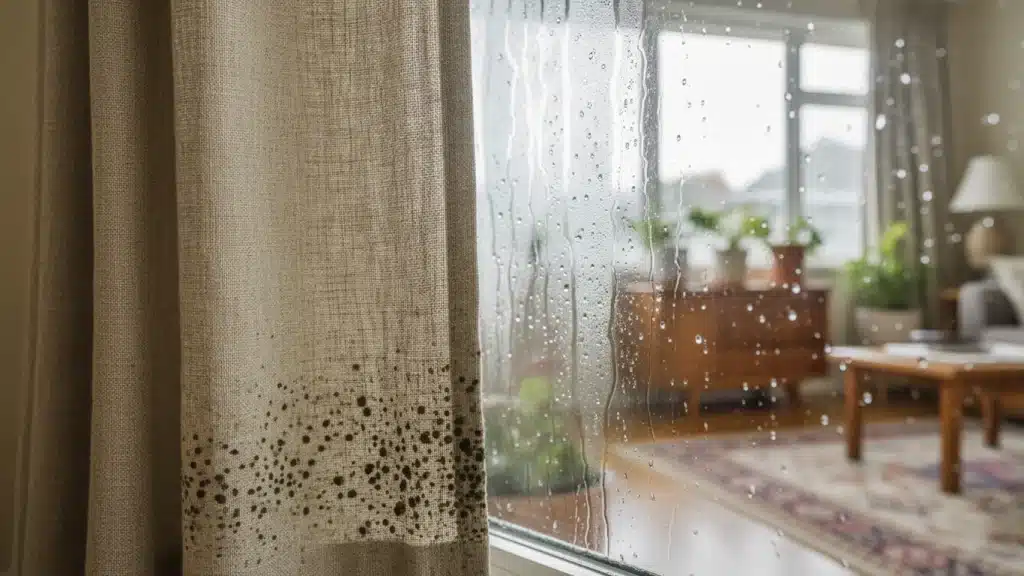
The safest way to clean mouldy curtains is to work gently and keep dust to a minimum. Protect yourself first, then remove loose spores before using any wet cleaner. Spot-treat small areas, and only wash the curtains if the care label says it is safe. Make sure the curtains are completely dry at the end, since damp fabric can cause mould to come back. Following these steps helps you remove mould with less mess, less damage, and better results.
Mould on curtains can be harmful because it releases spores and irritants into the air that people breathe. This can make asthma and allergies worse, and may also cause coughing, wheezing, or irritation. Children, older adults, and people with breathing problems or weaker immune systems are usually affected more quickly.
If anyone in your home has trouble breathing, feels sick near the curtains, or if the mould keeps coming back quickly, it is best to stop and look at the ‘when to call a pro’ section instead of trying more DIY steps.
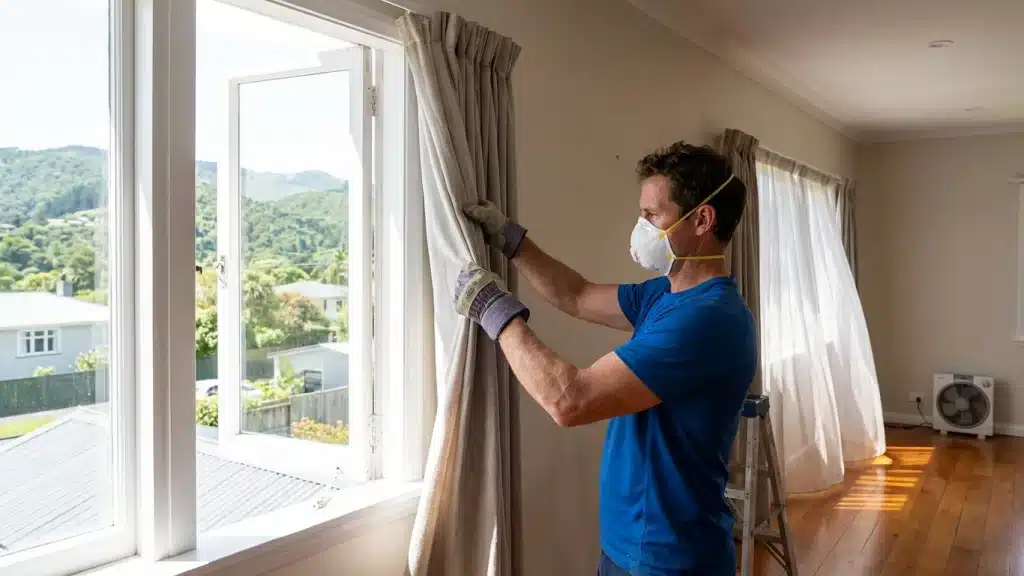
Put on gloves and a good mask, and open the windows to let in fresh air. If possible, take the curtains outside before you begin, as spores can spread inside when you brush or vacuum. Do not dry brush in a closed room, because this can send tiny particles into the air and onto other fabrics.
If you cannot take the curtains outside, work next to an open window, keep the space clear, and vacuum the area when you are done.
Start by reading the care label, especially if it says ‘dry clean only,’ or if the curtains have thermal linings or delicate fabric. If the label warns against water or heat, do not risk it, as the wrong wash can shrink or damage the curtains.
Next, try any cleaner on a hidden part of the curtain, like the back hem or inside edge. Use a small amount, wait a bit, then blot to see if the colour changes or marks appear before cleaning a visible spot.
Before using any liquids, gently remove loose mould so you do not push spores deeper into the fabric. Use a vacuum with a soft brush and move it lightly over the surface instead of rubbing hard.
If the mould is dry and dusty, try to do this step outside. This helps stop spores from spreading inside your home.
For small spots, treat them first. Many guides recommend mixing equal parts white vinegar and water in a spray bottle. Spray lightly, let it sit for a short time, then wipe or blot gently without scrubbing.
You can also use a mild detergent solution for light mould, as this is often safe for fabric. Do not use strong bleach on curtains, because it can damage the fabric, remove colour, and does not fix the moisture problem that caused the mould.
Yes, you can often wash mould out of curtains, but only if the care label says it is safe. If they are machine washable, use a gentle detergent and a gentle cycle. If not, hand-wash them in a tub with mild detergent instead.
If you are not sure, be careful. Use cold water on a gentle cycle, and do not use a dryer for lined or coated curtains unless the label says it is safe.
Drying is the key step to stop mould from coming back. Do not hang up the curtains while they are still even a little damp, because moisture in the folds can cause mould to grow again in just a few days.
Try to dry the curtains in a place with good airflow, and use a sunny spot outside if the fabric allows. Also, fix the moisture problem, like poor ventilation or frequent condensation, so your curtains stay clean longer.
Mould reproduces through microscopic spores. These spores travel through indoor air and land on fabric, dust, or damp surfaces. When conditions stay moist, they grow and spread. You might notice more sneezing at breakfast or a dry cough after a night with the windows shut. Children and older adults can feel this more, and pets can react as well.
This is not just an issue of smell or appearance. Spores and fragments irritate the airways. For people with asthma, they can trigger wheeze and tightness. For those with allergies, they can cause itchy eyes and a runny nose. Over time, the body can stay on alert, which is tiring and stressful. The lesson is simple. If mould is present, the whole room feels it, even when you cannot see it clearly.
Many households try a quick wipe with a strong product. It seems to work on hard tiles or a shower tray, so it feels logical to try the same approach on fabric. Yet curtains are not tiles. Fibres absorb liquid, colours can lift, and finishes can weaken. Bleach can make a stain fade today while harming the fabric for tomorrow.
There is a deeper issue, too. Surface wipe-downs can miss the roots. Mould filaments can reach into the weave and the lining. A harsh wipe cleans what you can see while leaving the source intact. Within days, the spots return in the same places. The question often asked is, can you use bleach to clean mould on curtains? The truthful answer is that bleach can cause damage, and it often fails to fix the cause.
It is normal to trust your eyes. If you cannot see a stain, the fabric must be clean. Sadly, mould often grows where you do not look. The inner folds, the back of the heading tape, and the hem are favourite places. Bathrooms, laundries, and damp basements are common risk zones, yet living rooms and bedrooms are not immune. Condensation around aluminium frames or single glazing can feed growth even in tidy spaces.
You can test this by smelling the fold near the hem or the lining seam on a damp day. If the odour is sharp or earthy, there is likely growth. You may also notice a fine shadow line along the edges, not a bold spot. That subtle mark shows where moisture sits after the morning shower or the evening cook-up. Visual checks alone miss a lot, which is why symptoms often return after a quick refresh.
Many people see mould as a stain only. It spoils the look and needs a tidy, nothing more. Yet the bigger risk sits in the air. When you draw the curtains in the morning, spores are released. When you shake out the folds during cleaning, particles move around the room. If anyone in the house is sensitive, the reaction can be quick.
There are wider impacts as well. Poor sleep follows a stuffy night. Children may feel tired at school. Adults can lose focus at work. Over weeks, these small effects add up. It is not just about how the room looks. It is about how everyone feels living in it. That is why tackling the source matters more than hiding the marks.
Mould settles into fibres and linings because fabric holds moisture and dust. Daylight and airflow can slow growth, yet heavy folds and tight tracks create still pockets where damp air sits. Once growth begins, it spreads along the weave and into stitching. A surface wipe cannot reach that far, which is why the problem keeps coming back.
A proper solution reaches into the layers. Professional processes do two jobs at once. They remove the growth, and they break down the residues that feed it. This includes skin flakes, oils, and cooking vapours that cling to fibres. The aim is a deep clean that restores the fabric and makes it harder for growth to return.
A specialist service uses safe chemistry, measured dwell times, and controlled rinsing. The goal is to clear mould, mildew, dust mites, and fine particles without shrinking or fading the fabric. Each step matches the fibre type and the construction of the curtain, whether it has a foam-backed lining or a separate lining layer.
Here is what a thorough service typically includes:
By the end, curtains feel fresh, odour drops away, and indoor air feels easier to breathe. Many households notice fewer sniffles in the morning and a calmer feel in rooms that once held damp air. This level of professional curtain cleaning is hard to match with household tools.
Material matters. Sheers can snag or stretch. Linen can crease. Cotton can shrink. Foam-backed blackout curtains need special care to protect the coating. A trained technician tests for colour fastness and selects a method that respects those limits. If a seam is fragile or a trim looks risky, they adjust the process to protect it.
This care also applies to construction. Some curtains have interlined layers. Others use tapes that can hold moisture. Professional handling keeps the structure stable and the fall neat. The result is a curtain that looks right when rehung, rather than a panel that pulls or bows after a rough wash.
Window dressings do not end with fabric panels. Many homes use Roller blinds in kitchens or bathrooms, and other blinds across living spaces. These surfaces collect steam, oil, and dust, which means they can harbour growth as well. A full home approach treats all coverings, not just the obvious pair in the lounge.
Cleaning methods differ by product. Blinds and shades need solutions that lift grime without harming finishes or mechanisms. A specialist identifies the material, checks for UV wear, and chooses the right process. When all coverings receive care, rooms feel fresher for longer, and symptoms improve across the whole living area.
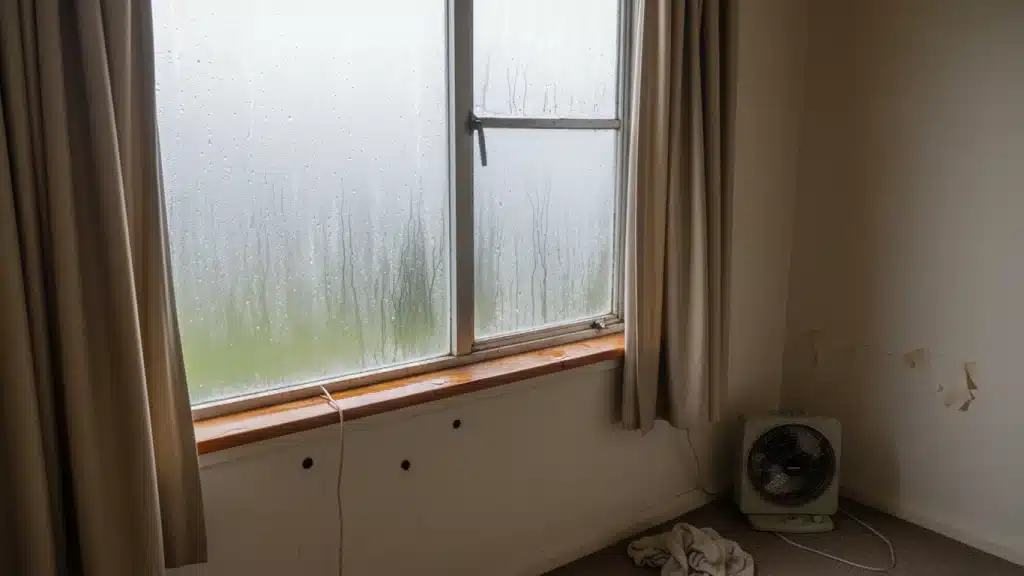
Before cleaning mould on curtains, check what caused the dampness first. In 2026, renters expect homes to be warmer and drier since the Healthy Homes Standards now apply to all private rentals. However, mould can come back quickly if the room still traps moisture, even after a good clean.
People often blame the curtains first because they hold smells and show spots. But curtains usually soak up what is already in the room, like condensation on windows, steam from showers, or damp air from drying laundry inside. You might clean the hem on Sunday, but by Thursday, the musty smell can return if it rains. For anyone with asthma or allergies, this cycle is even more stressful because symptoms can start before you see any marks.
Begin with the rooms that make the most steam, usually the bathroom and kitchen. The ventilation standard says rental homes must have windows that open in key rooms, and bathrooms and kitchens need extractor fans that fit the space. If the bathroom fan is weak, vents into the ceiling, or does not clear the mirror, moisture can move into nearby rooms and settle in soft furnishings. This often shows up as a damp strip at the bottom of curtains or a strong smell after showers and cooking.
Quick checks that feel practical:
Next, check outside the room, since mould on fabric often comes from water getting in. The moisture ingress and drainage standard states that rental properties need effective drainage systems and must address moisture problems that keep homes damp. In simple terms, this can mean blocked gutters, overflowing downpipes, damp spots near windows, or leaks that leave a mark on the wall.
Signs people often miss:
If you notice these signs, cleaning the curtain can help, but it will not last unless you stop the water source.
Even in homes that meet the standards, daily habits can raise humidity. For example, drying clothes on racks in the lounge during wet weeks can fill the room with moisture. This leads to condensation overnight, and curtains may touch damp glass in the morning. Closed doors and drawn curtains also trap still air, so dampness stays in the folds.
Here is a simple test: on a cold morning, see if the windows are wet and if the curtain edge feels damp near the hem. If this happens often, the room needs better airflow and moisture control, not just a surface clean.
It can feel awkward to mention this, especially if you are worried it might sound like a complaint. Still, being specific and calm helps. Take a photo of the mould spots, note when the smell comes back, and mention likely causes, such as showers, cooking, or rain. Then ask about ventilation and moisture control, since these are often linked to repeated curtain mould in rentals.
Once airflow improves and moisture sources are managed, professional curtain cleaning usually lasts much longer. At this stage, the clean works with the room, not against it. It refreshes the fabric, removes the residue that causes mould, and helps your home stay fresher for longer.
After a deep clean, the rooms smell like fabric, not damp. The air feels lighter. Guests notice the change when they enter, and you feel it each morning when you draw the curtains. Odour comes from growth and residue, so removing both brings quick relief. If you struggled with a lingering smell near soft furnishings, this is often the turning point.
The benefits go beyond scent. Cleaner fibres shed fewer particles, which can ease daily symptoms. Families tell us that reading time in the evening feels more comfortable and that bedrooms seem less stuffy at night. A house should support rest and recovery. Clean coverings help the whole home reach that goal.
Curtains are not cheap. Fabric, lining, and hardware add up, especially across a whole house. Replacing them due to mould damage can strain the budget. Professional care revives colour and keeps the fabric in service for longer. This is true for bespoke curtains and for widely used ready-made curtains in NZ.
Cleaning also protects tracks, hooks, and floors. Damp hems can stain carpet or timber, and heavy growth can weaken seams. Restoring the fabric breaks that cycle. Many households choose to service the worst rooms first, then move through the rest of the home. The spending feels manageable, and the results build room by room.
A home should feel fresh, not heavy. If mornings bring a musty smell and a tight chest, look to the window coverings first. Curtains gather moisture and dust, which makes them a quiet home for growth. Quick wipes and harsh products give short wins, yet they rarely fix the source. Safe, deep care solves the real issue and keeps the fabric in service.
For a clear path forward, choose experts who understand curtains in NZ and local conditions. They will remove mould at its source, protect colour and shape, and clean related coverings like Roller blinds and other blinds. If you have questions about professional curtain cleaning for mould removal, ask during an assessment. Your family will notice the difference. Rooms will smell clean, mornings will feel easier, and your investment in fabric will last longer.


